

A professional skin assessment is a crucial first step in determining whether to remove a mole, cyst or seborrhoeic keratosis.
Diasgnosis before treatment

On-site procedures

No DIY removal
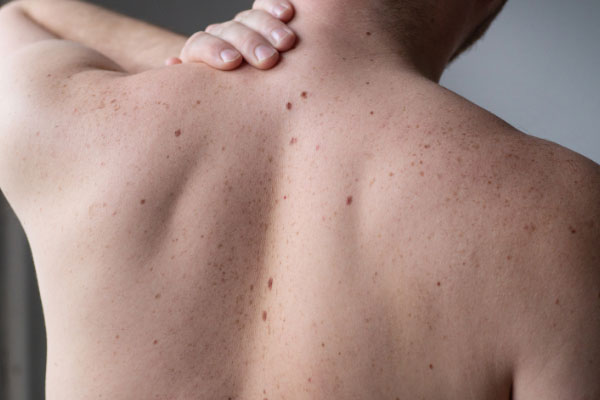
While benign lesions aren’t likely to be harmful to your health, they can be irritating or uncomfortable. When they’re in the wrong place, they can get caught on your clothing or jewellery or become irritated by shaving or brushing.
Please seek an assessment if you are concerned about a lesion that:
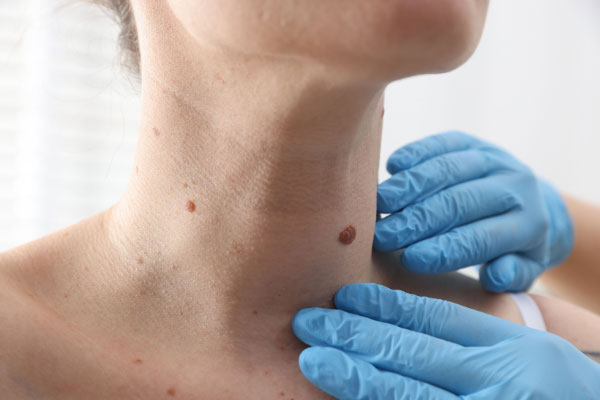
The first reason for a skin assessment is to determine what kind of lesion you have. Is it a benign mole, a seborrhoeic keratosis or a cyst? Of course, there’s always the other possibility – that it’s not actually benign and should be biopsied to test for skin cancer rather than superficially removed.
Once your clinician has identified the lesion, they can advise you on the most suitable next step, including removal.
Once a lesion has been assessed, the next step is deciding whether removal is appropriate. In many cases, this is a personal decision rather than a medical necessity, particularly if the lesion has been confirmed as benign.
You might choose to remove a benign lesion if its size or location bothers you or if it’s repeatedly irritated by clothing, jewellery, hairbrushes or shaving.
Some people use creams, acids or freezing products to tackle a lesion themselves. Others pick, scratch, shave or even cut off their own skin lesions rather than book a professional assessment.
DIY methods are not recommended because they increase the risk of infection, scarring and regrowth. It also misses the opportunity for a proper skin assessment – if the lesion is actually malignant, this may delay the diagnosis of skin cancer.
So, please resist the urge to remove a lesion at home! Seek help from one of our experienced dermatologists instead.

Benign moles are common and often do not require treatment. Removal may be considered when a mole is frequently irritated, located in a high-friction area, or needs further assessment. Treatment may involve shave excision or surgical excision, depending on the lesion.
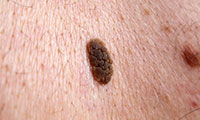
Seborrhoeic keratoses are harmless growths that may be removed when they catch on clothing, become irritated, or need to be distinguished from another skin condition. Common options include cryotherapy, shave removal, and electrosurgery with curettage.
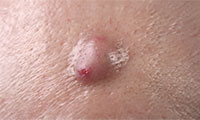
Skin cysts are often harmless, but removal may be considered when they are painful, inflamed, recurrent, or interfere with daily activity.
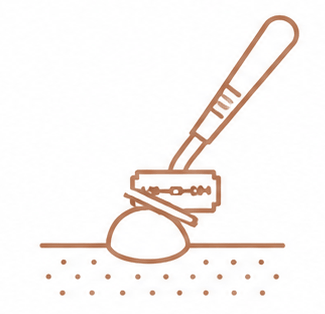
The most suitable method depends on the diagnosis, the lesion’s size and depth, and whether a specimen should be sent for pathology.

Shave excision removes the raised part of a lesion from the surface of the skin. It may be used for:
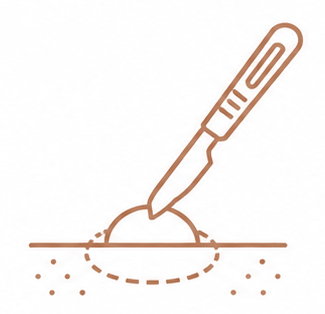
Surgical excision removes the lesion more completely and may be used when:
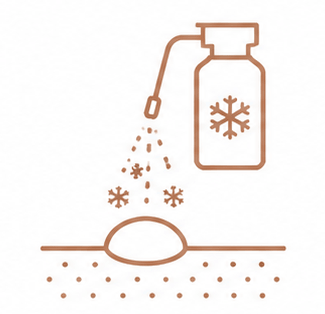
Cryotherapy uses liquid nitrogen to freeze the lesion. It may be suitable for selected superficial benign lesions. The area may blister or crust before healing.
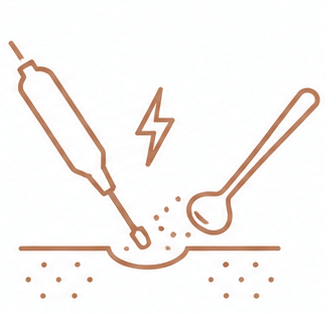
For some raised benign lesions, electrosurgery may be used to destroy tissue, and a curette may then be used to remove the lesion.
This is a recognised treatment option for selected seborrhoeic keratoses.
Laser treatment may be discussed in selected cases, depending on the lesion’s type, depth and size, and whether tissue is needed for pathology.
Laser treatment is not suitable for every lesion – another reason why diagnosis should happen before treatment.
The cost varies depending on the:
A firm quote can only be provided after an in-person consultation.
Purely cosmetic removal is not usually covered by Medicare.
If there are medical reasons for removal, which meet specified MBS criteria, then a Medicare rebate may be available in some cases.
Eligibility can only be confirmed after assessment. Some benign lesion types are excluded from certain MBS item groups.
Your clinician should explain the likely healing process for your specific procedure. As a general guide:
All procedures can leave a mark and some may scar. Risks may include:
No. At-home removal is not recommended because it can cause infection, scarring, incomplete removal and delayed diagnosis of skin cancer.
The cost varies based on the lesion, its size and number, the treatment method, and whether pathology is needed. A quote can only be confirmed after consultation.
Not always. Many benign lesions can be left alone. Removal is usually considered when the lesion is irritating, catching on clothing, or is something you would prefer removed after it has been professionally assessed.
Common methods include shave excision and surgical excision. The right option depends on the lesion and whether histology is needed.
Healing depends on the treatment method and site. Simpler procedures may heal in 1 to 2 weeks, while excisions may take 2 to 4 weeks or longer.
Purely cosmetic removal is not usually covered. Some clinically indicated removals may be eligible if MBS requirements are met.
It can in some cases, depending on the lesion type and removal method. Recurrence is one reason professional assessment and method selection matter.