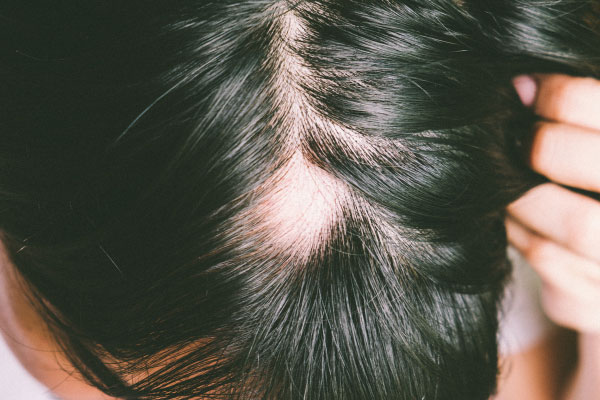
Hair loss, or alopecia, is a condition characterised by partial or complete loss of hair on the scalp or body. It may result from a range of causes including genetics, autoimmune conditions, hormonal changes or stress. A personalised assessment can help determine whether treatment options are appropriate for your situation.
Male and female pattern hair loss (androgenetic alopecia)
This is the most common type of hair loss, caused by genetic and hormonal factors. It leads to gradual thinning over the crown and temples in men, and diffuse thinning over the top of the scalp in women.
Alopecia areata
An autoimmune condition where the body’s immune system attacks hair follicles, causing sudden patchy hair loss on the scalp or body. It can resolve on its own or become recurrent.
Telogen effluvium
A temporary shedding of hair following physical or emotional stress, illness, surgery or nutritional deficiencies. It usually causes diffuse thinning and can take several months to resolve.
Scarring (cicatricial) alopecia
A less common but serious form of hair loss where inflammation destroys hair follicles and replaces them with scar tissue, which may lead to permanent hair loss. Early diagnosis and management may help limit progression, depending on the cause.
Hair loss can be triggered by a range of factors, including genetics, hormonal changes (such as pregnancy or menopause), autoimmune conditions, stress, certain medications, thyroid disorders, iron deficiency or rapid weight loss. Understanding the underlying cause may help guide treatment options and support effective management.
Treatment options may vary depending on the type and cause of hair loss. These may include topical or oral medications, corticosteroid injections, platelet-rich plasma (PRP) therapy in some cases, or scalp care recommendations. Because hair loss can result from a wide range of factors, a consultation with a healthcare professional is recommended to explore appropriate management options.
Depending on where you’re at in your journey, you can book an appointment with our dermatology practice.
Treatment options
Depending on individual circumstances, treatment options may include:
39 Station Street, Sunbury VIC 3429
Depending on individual circumstances, treatment options may include:
39 Station Street, Sunbury VIC 3429
Depending on individual circumstances, treatment options may include:
Building 1: 115 O’Shanassy Street, Sunbury VIC 3429
If you’re a new patient, you’ll be invited to attend an initial consult prior to your service to ensure it’s right for you.

See your GP to obtain a referral

Initial consult to discuss
skin concerns and goals

Receive a treatment plan to support your skin health